1979 Kawasaki KX-A5 MX range revisited
By Team TMX on 17th Jul 26
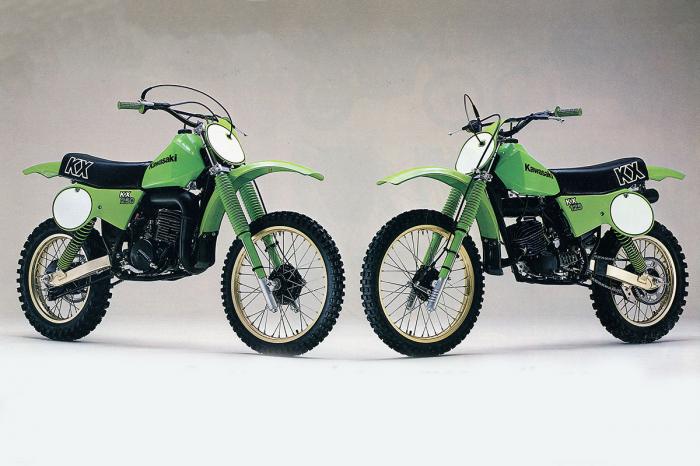
Cast your mind back to the close of the 1970s, when motocross was advancing at a pace that left little room for hesitation. Circuits were getting rougher, riders faster, and machinery was under increasing pressure to deliver not just outright speed, but the ability to sustain it over the length of a hard-fought moto. The major Japanese manufacturers were locked in a relentless development race, and for 1979 Kawasaki’s response came in the form of the KX125 and KX250 A5 – two machines that combined progressive thinking with race-bred practicality.
By this stage, Kawasaki had firmly established its credentials. The KX range, finished in unmistakable lime green, carried a reputation for sharp performance and a direct link to factory development. For ’79, however, the emphasis was less on headline-grabbing reinvention and more on refining the complete package - improving consistency, durability, and the kind of usable performance that mattered when the gate dropped.
Central to both machines was Kawasaki’s patented Electrofusion cylinder process. In place of the traditional cast-iron liner, the aluminium bore was coated with a sprayed layer of steel and molybdenum, creating a hard, porous running surface. The advantages were clear in principle – reduced weight, improved heat transfer, and the ability to run tighter piston clearances thanks to more consistent thermal behaviour. Period reports also pointed to improved resistance to seizure under racing conditions, though the system brought its own compromise in that the cylinder could not be rebored in the conventional sense. It was, by the standards of the day, a forward-thinking solution – one that hinted at where two-stroke development was heading.
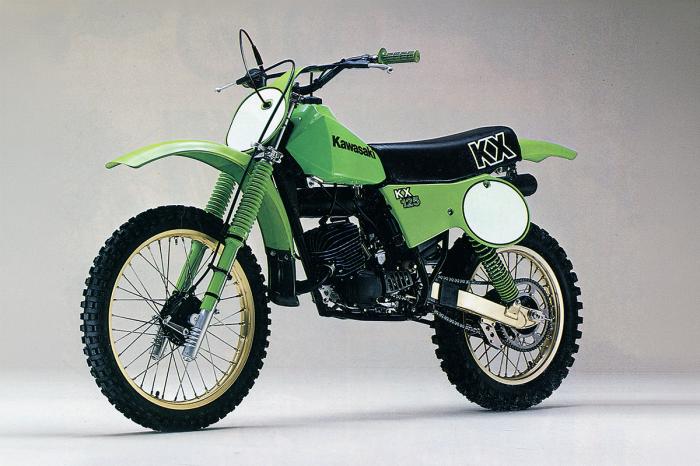
In 125cc form, that technology underpinned a compact, highly strung engine that demanded to be ridden with intent. Like most machines in the class, the KX125 did its best work in a relatively narrow powerband, coming alive when kept on the pipe and ridden aggressively through the gears. The Mikuni carburettor delivered clean response as the revs built, and when everything was working in harmony, the bike rewarded commitment with a strong drive into the upper reaches of the rev range. Let it fall off the boil, however, and it quickly reminded you that precision and momentum were everything in this class.
Out on the track, the KX125 felt light and responsive, its steel frame offering a balance between agility and stability that suited the fast-evolving nature of late-’70s circuits. Steering was quick enough to pick tight lines, yet the bike would track straight when the going got rough, provided the rider stayed positive on the controls. Suspension followed the established formula of telescopic forks and twin rear shocks, but with steady refinement to damping and spring rates. It was a setup that worked best when ridden assertively - attack the bumps and the bike would respond but hesitate, and it could feel busy beneath you. Braking, via drums front and rear, was typical of the period – progressive rather than powerful, demanding anticipation rather than last-second heroics.
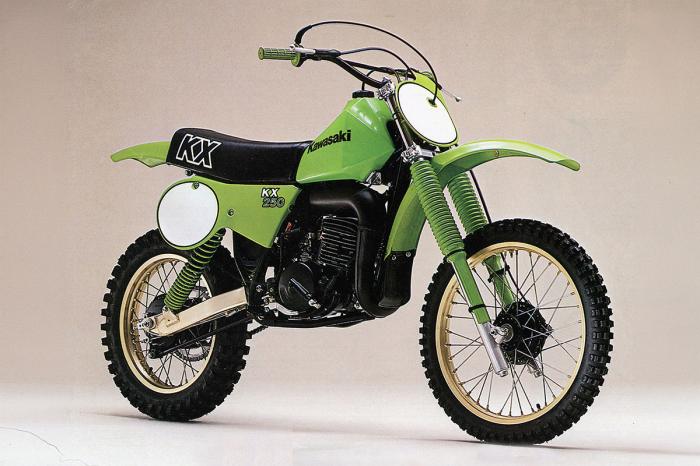
If the 125 was a machine that rewarded precision, the KX250 brought a broader, more forceful character to the fight. Sharing the same electrofusion cylinder technology, the larger engine delivered a wider spread of power, with a stronger mid-range that made it more forgiving in difficult conditions. It would pull cleanly through deeper going and drive hard out of turns, allowing the rider to maintain momentum without constantly working the gearbox. Open it up, and there was still enough on top to keep it competitive on faster sections.
That added performance inevitably placed greater demands on the chassis, and Kawasaki responded by reinforcing the frame and uprating suspension components. The forks were set to cope with higher speeds and heavier landings, while the twin rear shocks were tuned to maintain control over repeated bumps and rutted surfaces. Wheel travel was limited by modern standards, but for the time it was competitive, and the overall package gave the rider the confidence to keep the throttle open where lesser machines might demand restraint.
On track, the KX250 felt planted and purposeful. It could be steered accurately into turns and held on line with a minimum of correction, while the engine’s broader delivery made it easier to manage across varying conditions. Where the 125 demanded constant attention, the 250 allowed a little more latitude – but it was still very much a race-bred machine, happiest when ridden hard.
Beyond outright performance, both machines showed clear attention to durability. The bottom ends were built to withstand sustained high-rev use, and the air-cooled cylinders carried ample finning to deal with the heat generated during long motos. Maintenance remained straightforward, an important consideration for the privateer rider, and the overall construction reflected a desire to produce bikes that could be relied upon week in, week out.
In keeping with the spirit of the time, neither bike flattered its rider. They required effort, precision, and a willingness to stay on top of the job from start to finish. But for those prepared to meet that challenge, the rewards were considerable. The KX125 and KX250 were competitive and resilient, capturing the essence of late-1970s motocross, where success was definitely earned the hard way.